
Eliminate Tobacco Use
2025-2026 Impact Report
Impact Report
Academic Year in Review

Over the past year, the Eliminate Tobacco Use (ETU) Initiative has proudly partnered with institutions of higher education and partner organizations to advance tobacco control efforts. By providing prevention strategies, policy support and education about cessation services and resources, ETU helps campuses build healthier, more supportive environments that enable students, faculty and staff to succeed.
Partner institutions and organizations implemented a wide range of evidence-based actions. These included strengthening tobacco-free campus policies, identifying innovative approaches to update campus signage, building partnerships to improve enforcement and compliance, and hosting campus events to raise awareness about the risks of tobacco and nicotine use. The Campus Highlights section details campus efforts.
In addition to supporting ongoing campus efforts in policy, prevention, cessation treatment and research, we achieved the following:
- Published the ETU Framework article Building a comprehensive model to create tobacco-free cultures on college and university campuses in the Journal of American College Health.
- Hosted the 11th annual ETU National Summit in April 2026, with the national and state summits reaching a combined 486 attendees from 319 organizations and campuses across 41 states.
- Hosted four quarterly webinars to expand educational opportunities, reaching 610 total attendees and generating 271 recording views. This year marked the highest annual webinar attendance, the most recording views to date and included the highest-attended webinar on July 16, 2026.
- Added the ETU Webinars page to our website to make recordings from previous webinars accessible.
- Supported three institutions in customizing campus communication materials.
We are grateful to the individuals and institutions working to reduce tobacco and nicotine use.
ETU Texas Campus Progress Dashboard

Since the first site visits in 2016, the EndTobacco™ team has met annually with partner institutions to review progress and identify opportunities to support campus efforts. Data collected during these meetings is used to update the ETU Texas Campus Progress Dashboard.
The dashboard visualizes and scores campuses on tobacco-related efforts, including policy, prevention and cessation services. Initially focused on The University of Texas institutions, the dashboard expanded in 2025 to include non-UT institutions that are a part of the ETU Texas Steering Committee.
For the 2025-2026 academic year, UT San Antonio achieved a 100% rating in criteria across the 3 domain areas of policy, prevention and cessation.
ETU by the Numbers
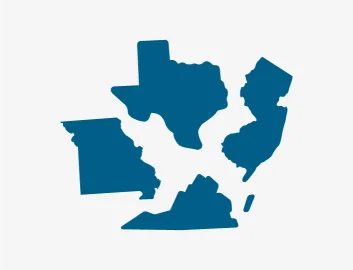
4 Active partner states (MO, NJ, TX, VA)

488 Total organizations and colleges/universities engaged across 48 states

486 Summit attendees

358.75 CE credits provided at ETU Summit

610 Webinar attendees

93 CE credits provided at ETU Webinars

271 Webinar recording views in FY2026

1,332 Email list subscribers

3 Steering committee meetings held

5,898 ETU website visitors

25,746 U.S. webpage views
Why the Higher Education Setting?
Nearly all tobacco use begins early in life, with approximately 9 out of 10 adults who use tobacco starting before age 18 and almost all by age 26 (American Cancer Society, 2024). This makes the college-age years a critical window, where experimentation can either progress into long-term use or be interrupted before addiction patterns are established. At the same time, young adults report some of the highest rates of quit attempts yet are less likely to use evidence-based cessation support (VanFrank et al., 2024). This gap highlights a key opportunity to intervene at a moment when behavior is still changing.
Additionally, the rise of alternative nicotine products reflects a shifting landscape in how young people initiate and use nicotine. Colleges and universities are uniquely positioned to address both realities by sustaining progress in reducing cigarette use while also responding to emerging patterns of nicotine use.
The ETU initiative collaborates with higher education institutions to reduce the impact of tobacco and nicotine use on college and university campuses. ETU invites all types of institutions—from universities and community colleges to vocational schools and technical institutes—to join in fostering healthier, tobacco- and nicotine-free environments for everyone.
Smokefree and Tobacco-Free Colleges and Universities
2577
100% smoke-free U.S. and Tribal Colleges and Universities
OF THESE 100% SMOKE-FREE SITES:
2,175 are also 100% tobacco-free everywhere
(includes non-combustible forms/smokeless)
2,273 also prohibit e-cigarette use everywhere
1,237 also prohibit hookah use everywhere
615 also prohibit smoking/vaping marijuana everywhere
Source: Smokefree and Tobacco-Free U.S. and Tribal Colleges and Universities, American Nonsmokers’ Rights Foundation, July 1, 2026
- American Cancer Society. (2024, October 28). Why people start using tobacco. https://www.cancer.org/cancer/risk-prevention/tobacco/guide-quitting-smoking/why-people-start-using-tobacco.html
- VanFrank, B., Malarcher, A., Cornelius, M. E., Schecter, A., Jamal, A., & Tynan, M. (2024). Adult smoking cessation—United States, 2022. Morbidity and Mortality Weekly Report, 73(29), 633–641. http://dx.doi.org/10.15585/mmwr.mm7329a1
- American Nonsmokers’ Rights Foundation. (2026, July 1). Smokefree and Tobacco-Free U.S. and Tribal Colleges and Universities. https://no-smoke.org/at-risk-places/colleges/
Continuing to Monitor the Changing Landscape of Tobacco

Advancing knowledge is a core component of ETU’s mission. Through the annual summit and quarterly webinars, ETU connects our learning community with the latest research, evidence-based practices and emerging issues in tobacco and nicotine prevention and control. The following highlights showcase key lessons and insights shared throughout 2025-2026.
Tobacco and Nicotine Use Trends
Across the United States, cigarette smoking has declined steadily for decades, with every state showing progress and many projected to reach historically low prevalence levels in the coming years (Stone et al., 2025). These gains reflect sustained, policy-driven tobacco control efforts, including taxes, smoke-free laws and public health campaigns.
At the same time, the nicotine landscape has evolved, particularly with the rise of e-cigarette use among youth and young adults. While some individuals may use e-cigarettes instead of cigarettes, population-level evidence shows that increases in vaping have not driven declines in smoking (Pierce et al., 2025). Instead, the two behaviors largely operate independently, suggesting that e-cigarettes are introducing new users to nicotine rather than simply replacing cigarette use (Pierce et al., 2025).
Youth and young adult nicotine pouch use increased fourfold in three years: 2.3% of 13–20-year-olds and 6.3% of 21–28-year-olds now report current use (CDC Foundation, 2026).
The Regulatory Environment
In 2025 the U.S. tobacco regulatory landscape experienced significant changes, including federal workforce reductions, budget cuts and the closing of the Centers for Disease Control Office on Smoking and Health. Policy changes have also occurred, including the withdrawal of the proposed federal menthol cigarette ban in early 2025 amid legal and political opposition.
Fortunately, comprehensive tobacco control measures at the state and local levels continue to demonstrate effectiveness. Flavor restrictions, taxation policies and counter-marketing campaigns remain powerful tools. States with stronger restrictions on flavored tobacco sales are seeing slower growth in tobacco sales and different purchasing patterns for flavored products compared with states without these policies. For example, Massachusetts' comprehensive flavor restrictions, supported by effective enforcement, reduced sales of flavored e-cigarettes by more than 98% in brick-and-mortar retailers (CDC Foundation, 2024).
The tobacco regulatory framework continues to evolve through judicial challenges, policy shifts and administrative restructuring, creating both uncertainty and opportunity in navigating this landscape. Now more than ever, coordinated efforts at the national, state and local levels are critical, with the public health community playing a central role in shaping policy, planning and practice.
Nicotine Pouch Marketing and its Impact on Sales
Based on: Marynak, K. (2026, April 9). Health claims in current nicotine marketing: What the science says and what we can do about it [Conference presentation]. Eliminate Tobacco Use National Summit.
Once recognized primarily as the addictive component of cigarettes, nicotine is now being marketed as a performance enhancer to help improve focus and optimize performance. This shift is fueling rapid growth in nicotine pouch sales, with the U.S. seeing sales increase by 250.8% between January 2023 and August 2025 (CDC Foundation, 2025). Additionally, current use among youth and young adults continues to increase, with average nicotine concentration per pouch climbing and reports of “double stacking” pouches (CDC Foundation, 2026).
Marketing is driving this rise through multiple tactics: event sponsorships, discounts, influencer partnerships on TikTok and other social media platforms and efforts to shape regulatory policy. Companies are also adjusting messaging to position nicotine pouches as a tool to enhance focus, boost energy or relax, with some promoting nicotine "microdosing" for "clean, controlled focus." This strategy is consistent with 1990s tobacco industry documents revealing plans to position nicotine alongside caffeine. The effectiveness of this messaging can be seen in the rise of Google searches for "nicotine benefits," which began rising in 2024 and now outpace searches for "nicotine risks."
While nicotine may produce short-term improvements in certain aspects of cognition, these effects do not justify the well-documented long-term harms, including addiction. Nicotine is extremely addictive, with a liability index ranking it alongside opioids. Additionally, young people are particularly vulnerable to addiction because the adolescent brain continues developing until the mid-20s, with youth showing signs of dependence quickly, sometimes even before regular daily use begins.
Fortunately, comprehensive tobacco control strategies remain effective, including flavor restrictions, taxation policies (Rhode Island saw a 20% decline in pouch sales after implementing an 80% wholesale price tax), counter-marketing campaigns on platforms young people use and reporting false health claims to regulatory authorities. Most importantly, these strategies should include clear, consistent communication about nicotine's addictive nature and the serious long-term risks that accompany any short-term benefits.
- CDC Foundation. (2024). Monitoring E-Cigarette Trends in the United States. https://tobaccomonitoring.org/wp-content/uploads/2024/11/2024MonitoringE-CigaretteTrendsUS-1.pdf
- CDC Foundation. (2025). Monitoring Sales: Nicotine Pouch Trends. https://tobaccomonitoring.org/wp-content/uploads/2025/10/Nicotine-Pouch-Sales-Data-Brief_8.10.2025.pdf
- CDC Foundation. (2026). Monitoring Tobacco Product Use Among Youth and Young Adults in the U.S. TEEN+ Data Brief, Issue 4. https://tobaccomonitoring.org/wp-content/uploads/2026/05/TEENDataBriefIssue4_051126.pdf
- Pierce, J. P., Luo, M., McMenamin, S. B., Stone, M. D., Leas, E. C., Strong, D., Shi, Y., Kealey, S., Benmarhnia, T., & Messer, K. (2025). Declines in cigarette smoking among US adolescents and young adults: indications of independence from e-cigarette vaping surge. Tobacco control, 34(3), 286–293. https://doi.org/10.1136/tc-2022-057907
- Stone MD, Pierce JP, Dang B, et al. State and Sociodemographic Trends in US Cigarette Smoking With Future Projections. (2025). JAMA Network Open, 8(4):e256834. https://doi:10.1001/jamanetworkopen.2025.6834
National Summit Review
The 2026 virtual ETU Summit hosted by The University of Texas MD Anderson Cancer Center on April 9, 2026 brought together higher education leaders, public health professionals and student advocates from across the country to share strategies, highlight progress and strengthen tobacco-free efforts.
Reach of the National and State Summits
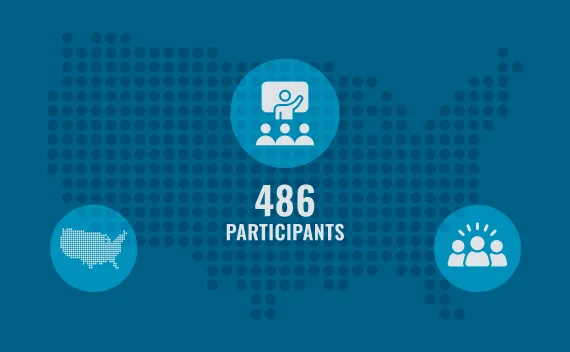
41 states

319 organizations and campuses
Keynote Speakers

Brian King, Ph.D., M.P.H.,
Executive Vice President, U.S. Programs, Campaign for Tobacco-Free Kids, kicked off the summit by discussing both the progress made in reducing tobacco use nationwide and the ongoing challenges facing prevention efforts, emphasizing the continued need for coordinated efforts at the national, state and local levels to shape policy, planning and practice.

Kristy Marynak, Ph.D., M.P.P.,
Senior Director, Tobacco Control Initiatives, CDC Foundation, shared insights on the rise of nicotine pouches and the impact of misinformation in nicotine product marketing.

Kim Pulvers, Ph.D., M.P.H.,
Principal Investigator and Director, Cannabis and Tobacco Research Lab of San Diego, Professor of Psychology, California State University San Marcos shared how they developed a tailored, evidence-based reporting tool and communication campaign to support the campus tobacco-free policy. Continued promotion and education, strong cross-campus partnerships and effective engagement tools were key to the program's success.
State Summits
ETU New Jersey

ETU New Jersey hosted 130 attendees on April 10, 2026 at Brookdale Community College for a day focused on advancing tobacco-free campus strategy through both policy and prevention efforts. The day opened with reflections on the state’s progress, including remarks celebrating 20 years of the New Jersey Smoke-Free Air Act, followed by discussions on emerging tobacco products, shifting trends among young adults and the environmental impact of tobacco waste.
Sessions also explored strategies for effective policy change and emphasized the importance of applying social justice and health equity lens to tobacco control. The summit closed with action-oriented discussions, equipping attendees with practical tools and resources to support continued progress in their communities.
ETU Texas
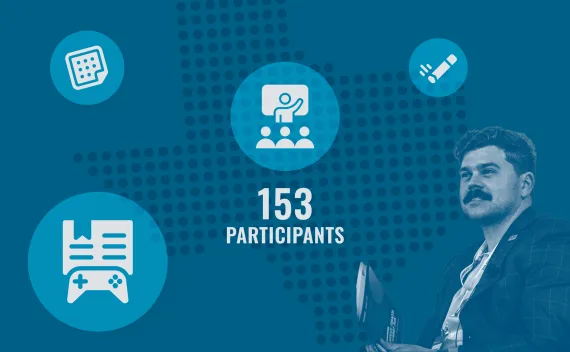
ETU Texas hosted 153 participants virtually on April 10, 2026 to share progress, explore challenges and strengthen tobacco-free campus efforts. Presentations provided a snapshot of tobacco use trends in Texas, highlighting declines in tobacco product use while raising concern about the unchanging rate of e-cigarette use and the growing popularity of oral nicotine pouches.
Panels focused on campus-tested prevention and policy strategies. A clear theme throughout the day was the importance of meeting students where they are through peer-to-peer engagement, student-led content, and integrating tobacco prevention into broader wellness efforts. Speakers emphasized cross-campus partnerships and low-pressure approaches, including quit kits and gamified learning, to reduce stigma and encourage behavior change. The summit concluded with action plan report-outs, identifying priorities and action steps for the year ahead.
ETU Virginia
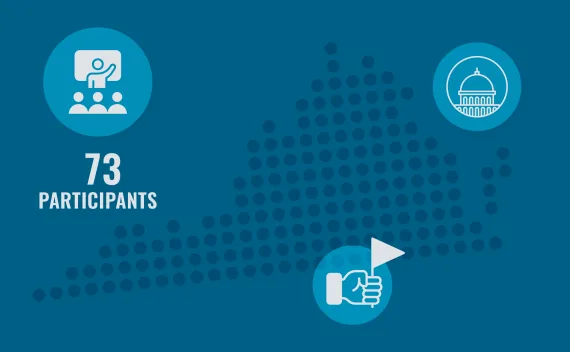
ETU Virginia hosted 73 participants virtually on April 20, 2026 for a morning of learning and collaboration. The summit started with a presentation highlighting the power of coordination across coalitions to advance tobacco-free efforts in a complex policy landscape. Sessions explored key topics shaping tobacco control in Virginia, including recognizing higher education leaders advancing policy change and examining co-use trends among young adults. The summit also highlighted the importance of building strong pipelines for peer-led advocacy, showcasing how youth engagement continues to drive progress. The summit closed with reflections on the collective work ahead and the continued momentum toward a tobacco-free Virginia.
ETU Quarterly Webinars
This year's four ETU quarterly webinars kept participants informed on emerging trends and evidence-based strategies to address tobacco and nicotine use. National experts discussed young adult tobacco use, nicotine product innovation, marketing tactics, policy implementation and cessation support.
Visit EliminateTobaccoUse.org/Webinars to view past webinar recordings.
Thank you to the speakers who contributed their expertise to the ETU Webinars:
October 2025

Matthew D. Stone, Ph.D.,
Assistant Professor, Herbert Wertheim School of Public Health and Human Longevity Science, University of California San Diego

Caroline North, Ph.D.,
Postdoctoral Fellow, Tobacco Research & Evaluation Team, Department of Kinesiology & Health Education, The University of Texas at Austin
December 2025

Elizabeth Seaman Jones, Ph.D., M.H.S.,
Senior Technical Advisor, CDC Foundation

Jamie Cordova, M.P.H.,
Epidemiologist, CDC Foundation

Nick Garza, M.P.H.,
Regional Technical Advisor, CDC Foundation
Caroline North, Ph.D.,
Postdoctoral Fellow, Tobacco Research & Evaluation Team, Department of Kinesiology & Health Education, The University of Texas at Austin
February 2026

Brittany Carpenter, M.P.H.,
Tobacco Prevention Coordinator, Missouri Partners in Prevention

Kristen Tertzakian,
Vice President, College Program and Grants, Truth Initiative
July 2026

Deanna M. Halliday, Ph.D.,
Center for Tobacco Control Research and Education Postdoctoral Fellow, University of California, San Francisco
Caroline North, Ph.D.,
Postdoctoral Research Associate, REBEL Research, USC Institute for Addiction Science, Keck School of Medicine, University of Southern California
Current Partners
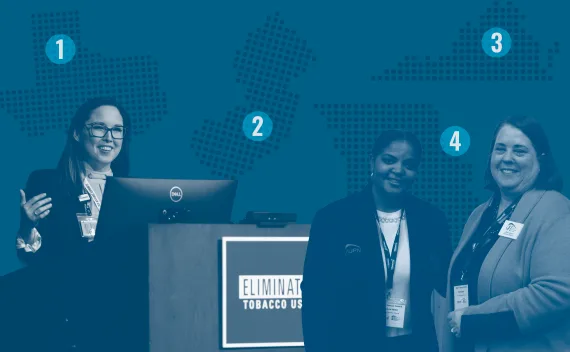
The ETU initiative serves as a model and resource for higher education institutions and community partners working to address tobacco use. Since its inception in 2015, other states have replicated all or parts of the initiative, with Texas establishing its own state-specific initiative in 2015, followed by New Jersey and Virginia in 2018 and Missouri in 2019.
ETU state initiatives bring together higher education institutions and public health professionals to develop resources and programming that reflect each state’s unique needs. While approaches are adapted locally, all state initiatives maintain alignment with the core ETU model—addressing tobacco use through policy, prevention and education, cessation treatment services and research to ensure efforts are evidence-based and grounded in best practices.
ETU Missouri
ETU Missouri is proud to report the following accomplishments over the past year.
- Fulfilled 226 technical assistance requests through the Young Adult Tobacco Use Prevention Program Coordinator.
- Supported 258 tobacco retailer owners, managers, and employees in completing online training on legal compliance and youth prevention best practices.
- Reached 494,262 individuals through paid and earned media to raise awareness of tobacco and e-cigarette harms, tobacco-free campus policies, the Young Adult Tobacco Use Program, and cessation resources.
- Hosted a Meeting of the Minds Tobacco Session with 25 attendees.
ETU New Jersey
This past year, New Jersey was able to provide three colleges financial support through our NJ Colleges & Universities Implementing Tobacco & Smoke-Free Policies (NJ CUITS) initiative. Two of these colleges have not previously been funded, so an additional 6,000 students are being reached this year through Ramapo College and Eastwick College. In addition, Tobacco Free for a Healthy NJ (TFHNJ) is providing a second round of funding assistance to William Paterson University and providing support as they improve and strengthen their policy and implementation on campus. TFHNJ works continuously with colleges and universities around the state to provide education and professional opportunities for students and staff to ensure that cessation resources are accessible to students across the state.
Highlighted Accomplishments:
- Completed two policy reviews (William Paterson University and Montclair State University).
- Hosted the 2026 Summit, with 100 in-person attendees.
ETU Texas
Over the past year, ETU Texas worked with colleges and universities across the state to strengthen tobacco-free policies, expand education initiatives and promote cessation services on their campuses.
The initiative partnered with institutions to create customized communication materials, including social media graphics for ETU Day and digital and print resources, to help campuses promote tobacco-free policies and cessation services.
Highlighted Accomplishments:
- Played a key role in planning and implementing the annual ETU Texas Summit, reaching 153 attendees.
- Presented at the summit, highlighting campus-led best practices and approaches advancing tobacco control across institutions.
- Contributed to creation of the Signage Toolkit by collecting examples of effective campus signage across the state to illustrate placement, scale and messaging.
ETU Virginia
Over the past year, ETU Virginia laid critical groundwork for its next chapter, collaborating with its steering committee to develop and release the 2026–2028 Strategic Plan. Grounded in the core components of the ETU initiative, the plan will guide efforts to strengthen tobacco-free policies, expand education initiatives, and advance cessation services across Virginia higher education.
ETU Virginia also deepened its collaborative reach by partnering with the Cancer Action Coalition of Virginia and the Tobacco Free Alliance of Virginia to co-host the annual ETU Virginia Summit which underscored the power of cross-sector partnership in driving meaningful change across the tobacco landscape.
Highlighted Accomplishments:
- Finalized and launched the ETU Virginia 2026–2028 Strategic Plan.
- Co-hosted the annual ETU Virginia Summit, reaching 73 participants.
- Updated and disseminated Tobacco Policy Surveillance Report Cards to all public and private four-year institutions in Virginia.
Campus Highlights: Strategies to Improve Policy Awareness, Compliance and Education Efforts
Building awareness of tobacco-free policies, promoting compliance and providing education and tobacco treatment resources with limited staff and funding remains a common challenge. Campuses are addressing this through several strategies:
Embedding training into existing touchpoints
One approach involves making policy education unavoidable by integrating it where people already are. UT Dallas requires students to complete education on alcohol and substance use before registering for classes. Other campuses build tobacco-free policy education into New Employee Orientation for consistent day-one messaging.

Simplifying the reporting process
Campuses report that compliance improves when reporting violations is easy. The University of Missouri and UT Health San Antonio have developed online reporting systems that are accessible to students, staff and visitors. These tools help track violation patterns and identify areas needing targeted outreach.

Rethinking traditional signage
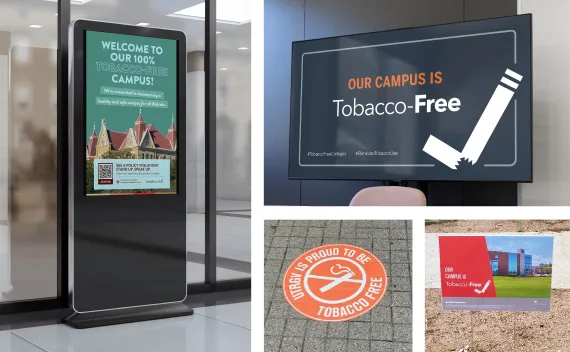
While permanent signage is expensive and slow to install, campuses are finding creative solutions. UT Rio Grande Valley uses floor decals in high-traffic areas, while Texas State University and other campuses use digital screens for flexible messaging. This combination of strategic permanent signage with adaptable digital options maximizes visibility while managing costs. Visit the ETU Signage Toolkit to view example signage from different campuses and submit your campus signage using the form to be featured.
Prevention and education through accessible, low-pressure approaches
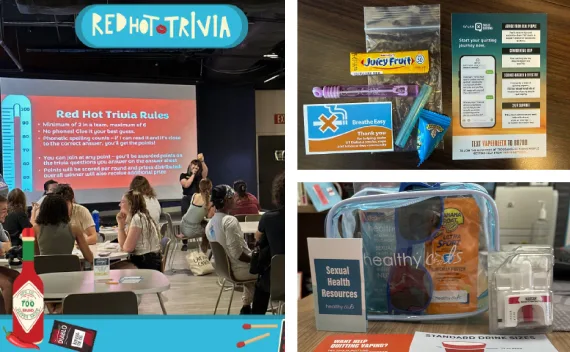
Campuses report success with engagement strategies that feel less like compliance mandates. Texas State University in San Marcos hosts events like "Red Hot Trivia" to make education interactive. UT Dallas and others utilize tobacco quit kits—containing cessation resources, stress management tools and campus support information—to provide tangible support without requiring students to seek help publicly.
Maximizing resources through strategic partnerships
Campuses are stretching limited budgets by integrating tobacco efforts into existing initiatives. UT El Paso uses student interns to build capacity while providing valuable public health work experience. Interns support efforts like planning social media content and helping organize the ETU Day health fair. Others embed tobacco-free messaging into wellness fairs and campus events rather than creating standalone programs, or partner across departments to share costs and expand reach.

Other strategies showing success
Bystander intervention training, regular campus-wide awareness surveys and communication of tobacco cessation resources through insurance benefits.
Visit the Success Stories page to learn more about the ETU Initiative’s work and how campuses are advancing tobacco control through events, partnerships, research and signage.
The Year Ahead

As we wrap up another year of the ETU initiative, we want to thank the many partners who make this work possible. From state and campus leaders to the students, staff and faculty advancing these efforts on the ground, your continued commitment is what moves tobacco-free initiatives forward.
Over the past year, we’ve worked to support those doing the work, day-to-day in a number of ways, from contributing to the broader body of research and providing technical support, to spotlighting state-led efforts and creating space for knowledge-sharing through the ETU Summit and quarterly webinars.
Together, this progress continues to build a more connected network and reinforces a common goal: improving the health and well-being of campus communities. We’re grateful for the collaboration that drives this work and look forward to building it in the year ahead.
Priorities for the 2026-2027 academic year:
- Enhance the Signage Toolkit
- Update the ETU website to be resource and core component forward.
- Continue promoting ETU to new audiences in and outside of Texas.
- Reinforce ETU’s role as a trusted resource to support institutions of higher education in adapting to shifting public health priorities and rapidly changing funding by assisting with both new and existing tobacco prevention and control efforts.
- Continue to expand the reach of ETU webinars and annual summits.
- Recruit additional partner states to join the current cohort of ETU replication sites (TX, MO, VA, NJ).
- Promote the utilization of ETU resources (communication materials and toolkits) through email listserv.
If you would like to stay connected, sign up for our email newsletter to receive updates on programs, resources and upcoming learning opportunities. – Sign Up.

State Initiative Leadership




Suggested citation
The University of Texas MD Anderson Cancer Center and The University of Texas System. (2026). Eliminate Tobacco Use. 2025-2026 Impact Report. Retrieved from https://EliminateTobaccoUse.org/Impact-Report.
Previous Impact Reports
Click here to view impact reports from previous years to learn more about our work and progress.